French 75: A Drink That Will Start the Party
The French 75 is a classic for a reason.
Back in the 1980s, I was a server at Red Robin in Seattle — when it was still a small local burger chain accented in red vinyl, brass railings, and ceiling fans. I freakin’ loved working there. Truly. The Bonzai Burger, to this day, is one of the best burgers I’ve ever had (flame-broiled, cheddar, pineapple, teriyaki sauce). The endless fries were crispy and tossed in this special salt blend. And more than once, as I set down a massive plate of Macho Nachos — piled high with taco meat, pickled jalapeños, sour cream, and endless melty cheese — I watched a stoner have what can only be described as a spiritual experience.
This place was ‘80s bliss.
Sunday afternoons were especially busy — the after-church crowd would come in, dressed up, hungry, and ready to settle in. And I remember so clearly that a lot of the women would order something called a French 75. I was 18years old. I had no idea what drinks were or how they were made.
I’d never even heard of a French 75
So I remember ringing in my first French 75 and then going to pick it up at the bar. It looked like a simple flute of champagne. I was unimpressed. The bartender explained it contained gin, lemon juice, simple syrup, and was topped with champagne. Huh. How could someone order that when we had things like a Cocoa Nutty Cow on the menu — a frosty, Almond Joy-like ice cream concoction that had fallen headfirst into a fully stocked bar? Now that was a drink.
But this French 75 thing? B-O-R-I-N-G.
But here’s the thing: I spent a few years growing up in France. My little brother was born there, and my parents wrote about food and wine, so French cuisine was always part of my world. Maybe that’s why the French 75 lodged itself in my memory. Cocoa Nutty Cows came and went, but the French 75 stuck around. By the time I was in my 30s, I finally had to know what all the fuss was about.
The French 75 packs the same punch as the cannon it was named after.
Rumor has it the French 75 was created at Harry’s Bar in Paris around World War I — and yes, there’s real documentation tying it to early 20th-century cocktail culture, including its appearance in the Savoy Cocktail Book in 1930. It’s named after the Canon de 75 modèle 1897 — a French field gun known for its speed, precision, and serious punch. The implication behind the name: This drink hits you just as hard. Which can be a good thing.
My brother Dominic has a philosophy about the first drink at a dinner party. Yes, it’s welcoming. But it has a job to do. It needs to shift the energy. It needs to say: we’re not just hanging out — we’re having a night. It can’t be tame. It needs to wake people up, loosen them just enough, and quietly push the evening forward. And it needs to do all of that elegantly.
That’s when I realized: The French 75 delivers on all fronts.
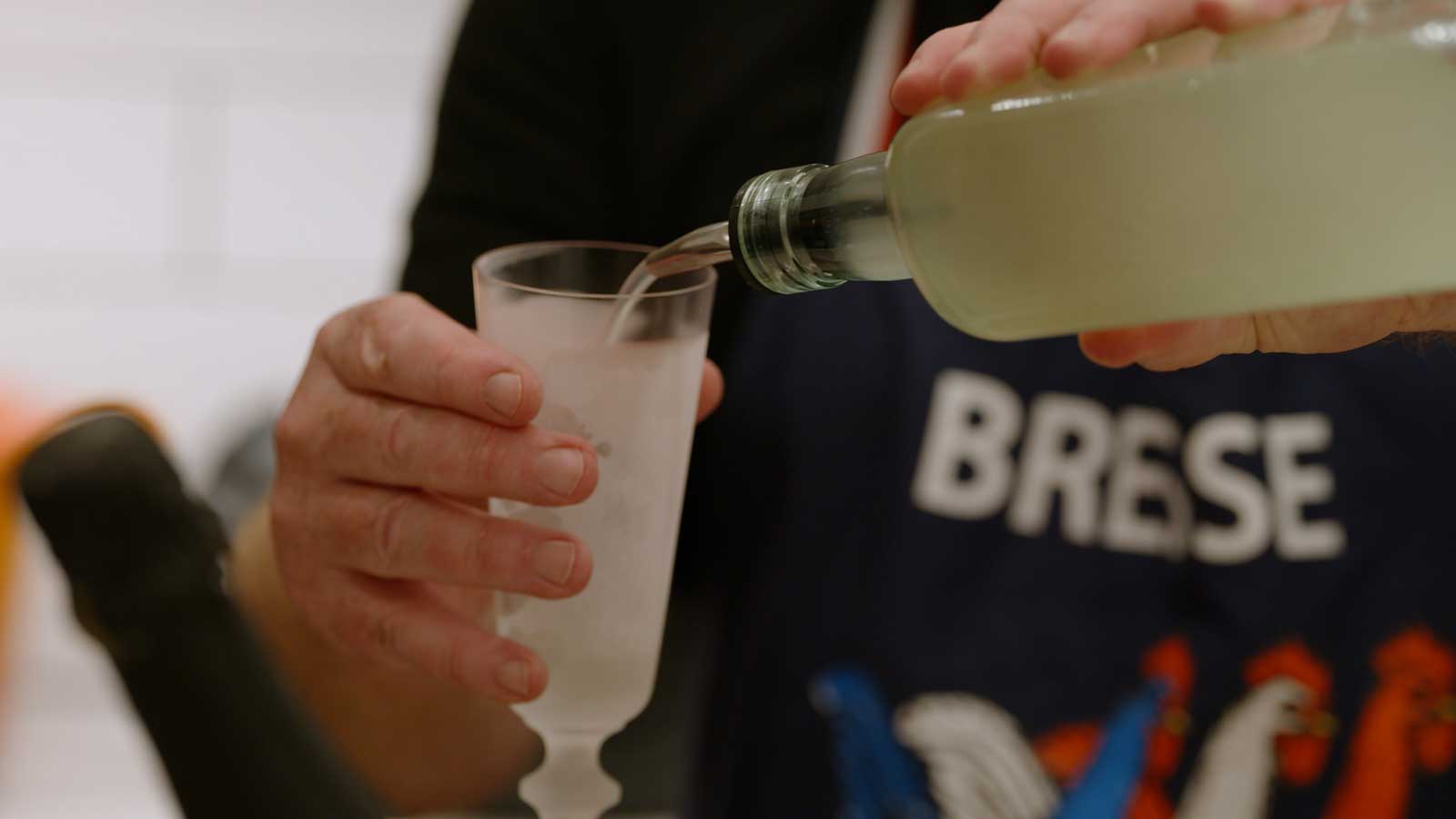
What I love about serving them at a dinner party is I don’t have to play bartender. I set up a big champagne bucket filled with ice — bottles of champagne (or champers-adjacent) nestled in, along with a pre-mixed base of gin, fresh lemon juice, and simple syrup. Glasses go in the freezer ahead of time. That first icy pour matters.
Everyone makes their own—and I get to enjoy the party.
Then people make their own. Some go heavy on the champagne. Some lighten it with soda water. Some just want bubbles and a whisper of citrus. It becomes interactive without being fussy — and everyone ends up with exactly what they want.
Looking back, those women at Red Robin knew something I didn’t. They weren’t ordering the biggest drink on the menu. They were ordering the right one. Something that just quietly did its job — and did it well. And now, every time I start a dinner party with a French 75, I think: Those ladies were already at the party. I just hadn’t arrived yet.