May 2026 – Dinner at Dave's

Biscuits For Dinner?

I once stayed at a Holiday Inn for a week in Morehead, Kentucky. This was back when I was a reporter covering Kim Davis, the county clerk and self-proclaimed Christian who was refusing to issue marriage licenses. To her, Jesus was very clear about his objection to gay weddings.

The hubbub around her exploded and my quick work trip got extended day after day. And while parts of the trip were nice, like watching Davis get arrested by US Marshals, the food nearby — I want to be diplomatic here — was not great.

The “fancy pizza in town,” as described by the front desk guy, was Papa John’s. The sit-down Mexican place served chile rellenos stuffed entirely with Kraft singles. And the hotel put out a complimentary breakfast of cereal and crumbly wet eggs — but the buffet also had one of the best things I’ve ever eaten: perfect, warm biscuits.

It turned out, unlike the other pre-fab feed in the breakfast trough, every day one of the employees made biscuits from scratch in a little room off the lobby.

“Oh, honey, they’re easy,” she told me.

That lady saved my trip, and as a kid from Seattle, eating a fresh biscuit with gravy hit harder than getting my first flannel.

But it was honestly intimidating to bake them myself. During the covid lockdown, I was hunkered with friends in the Catskill Mountains, and while everyone was strapped to their laptop, I wanted to try. The fact that one of them was my friend Bryan, a preternatural baker and writer from South Carolina, didn’t help my confidence. But I followed the recipe and, sweet heavens, Bryan approved.

Like a lot of classics, a biscuit can remind you that a simple, unexpected comfort can be the best. That memory drove David and I when we were trying to give a classic French dish a down-home American twist for a crowd.

A simple, unexpected comfort can be the best

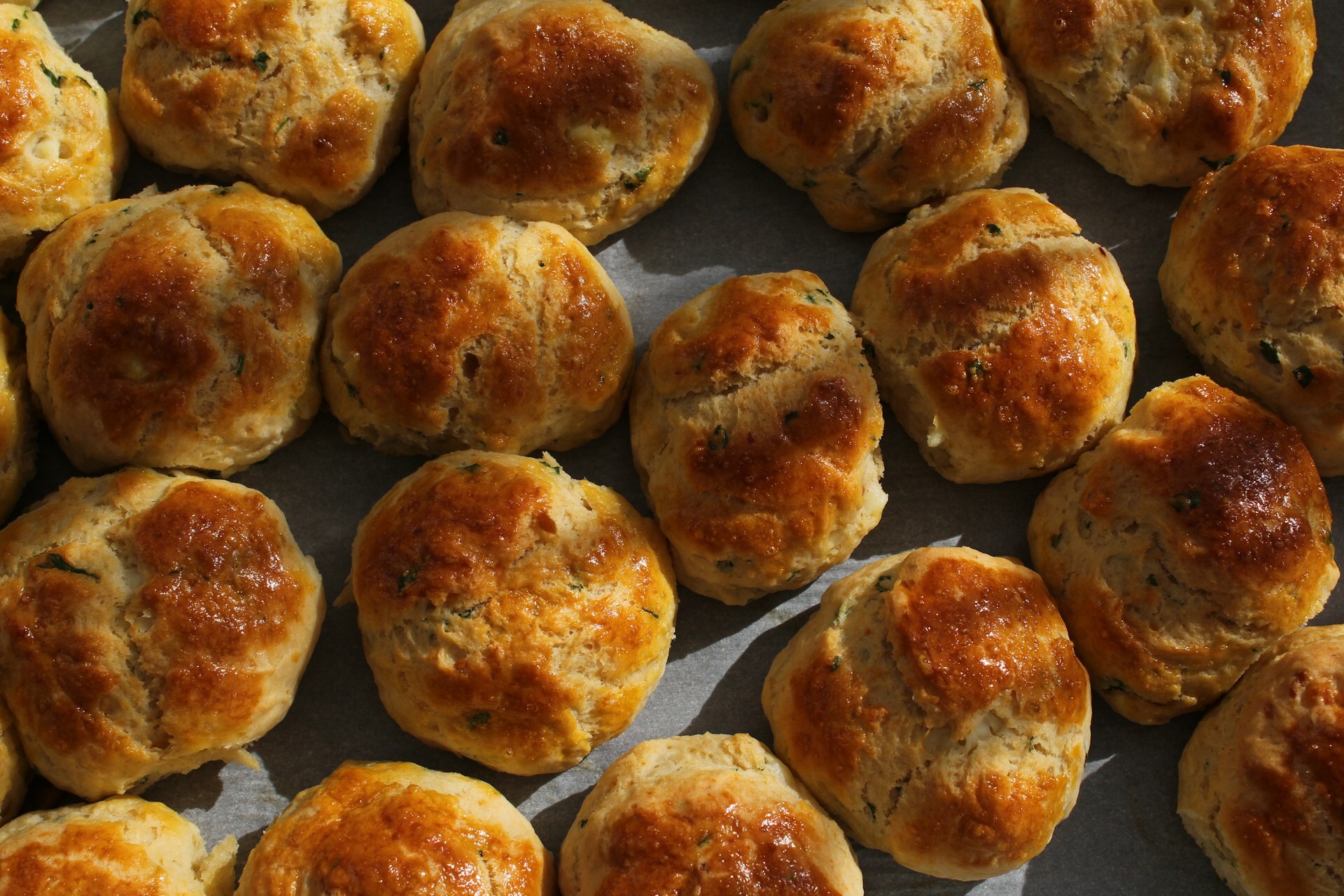
In developing our coq au vin recipe, we originally tried the dish over noodles. It turned out to be a handful to make pasta, ladle it at the table, and garnish everything while guests were buzzing about and the food got cold. It also lacked a wow factor. So we thought maybe we could riff on a pot pie and top it with biscuits — an unexpected combo. Plus, pulling up to the table with a piping hot coq au vin with a golden biscuit crust is always gonna be a showstopper.

Naturally, I consulted Bryan, who said he’d do a drop biscuit. “I’d want that slightly rustic vibe,” he texted me back, “and it avoids the complication of rolling out any pastry.”

So here we’ve done that: It’s a simple dough, spiked with cheese and pancetta, that’s scooped onto the coq au vin while it’s ripping hot. We brushed it with butter for a golden finish, and I couldn’t stop eating it. The cheese stretches as you pull apart the biscuit, which then sops up the sauce. You can top virtually any stew or braise to make it a complete dinner for a crowd. It reminded me that as a teenager, I joined a theater company called Anything for a Biscuit, and I didn’t realize it’d be a prophecy. I still would do anything for a biscuit, because in addition to being good… honey, they’re easy.

French 75: A Drink That Will Start the Party

Back in the 1980s, I was a server at Red Robin in Seattle — when it was still a small local burger chain accented in red vinyl, brass railings, and ceiling fans. I freakin’ loved working there. Truly. The Bonzai Burger, to this day, is one of the best burgers I’ve ever had (flame-broiled, cheddar, pineapple, teriyaki sauce). The endless fries were crispy and tossed in this special salt blend. And more than once, as I set down a massive plate of Macho Nachos — piled high with taco meat, pickled jalapeños, sour cream, and endless melty cheese — I watched a stoner have what can only be described as a spiritual experience.

This place was ‘80s bliss.

Sunday afternoons were especially busy — the after-church crowd would come in, dressed up, hungry, and ready to settle in. And I remember so clearly that a lot of the women would order something called a French 75. I was 18years old. I had no idea what drinks were or how they were made.

I’d never even heard of a French 75

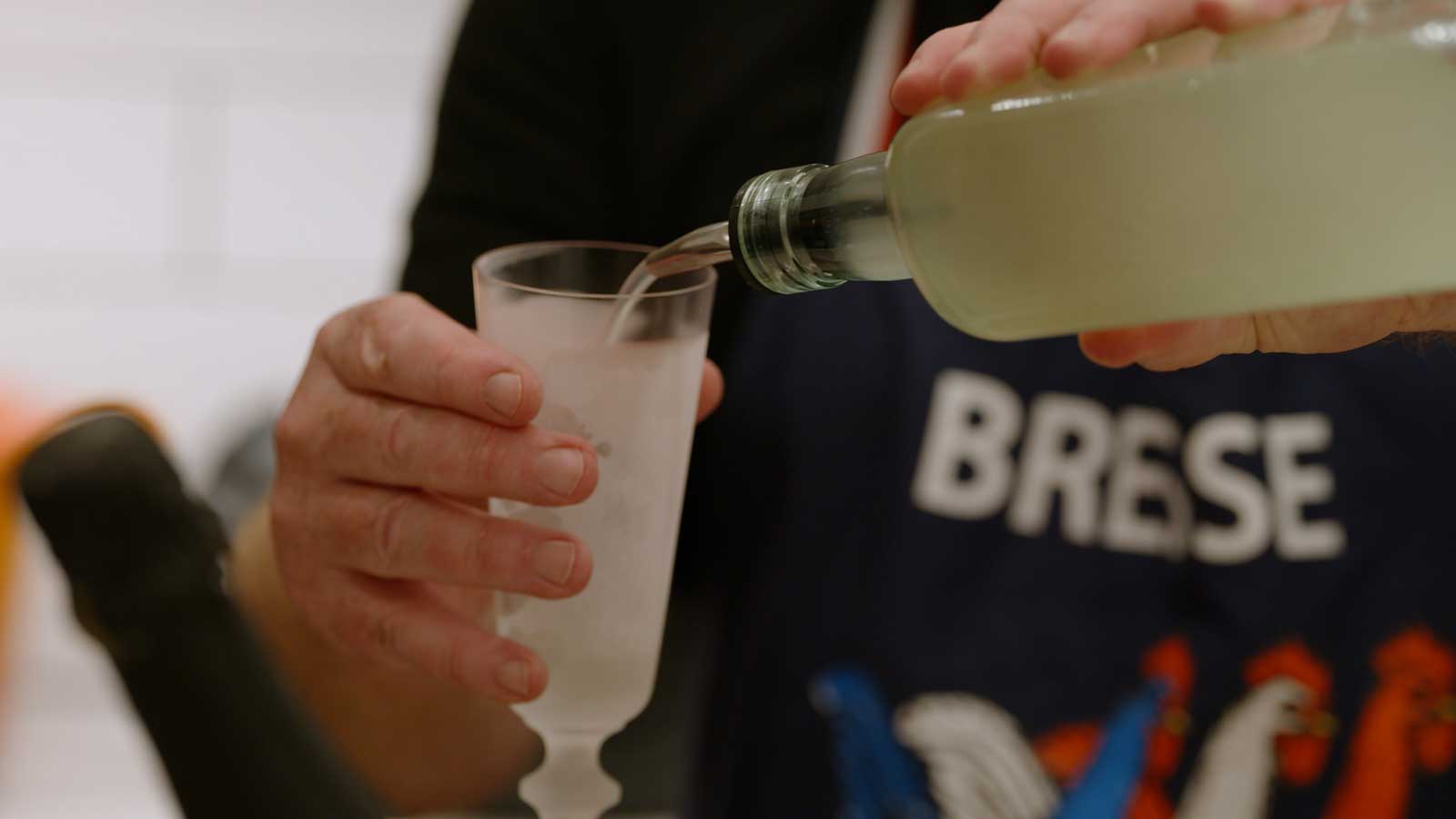
So I remember ringing in my first French 75 and then going to pick it up at the bar. It looked like a simple flute of champagne. I was unimpressed. The bartender explained it contained gin, lemon juice, simple syrup, and was topped with champagne. Huh. How could someone order that when we had things like a Cocoa Nutty Cow on the menu — a frosty, Almond Joy-like ice cream concoction that had fallen headfirst into a fully stocked bar? Now that was a drink.

But this French 75 thing? B-O-R-I-N-G.

But here’s the thing: I spent a few years growing up in France. My little brother was born there, and my parents wrote about food and wine, so French cuisine was always part of my world. Maybe that’s why the French 75 lodged itself in my memory. Cocoa Nutty Cows came and went, but the French 75 stuck around. By the time I was in my 30s, I finally had to know what all the fuss was about.

The French 75 packs the same punch as the cannon it was named after.

Rumor has it the French 75 was created at Harry’s Bar in Paris around World War I — and yes, there’s real documentation tying it to early 20th-century cocktail culture, including its appearance in the Savoy Cocktail Book in 1930. It’s named after the Canon de 75 modèle 1897 — a French field gun known for its speed, precision, and serious punch. The implication behind the name: This drink hits you just as hard. Which can be a good thing.

My brother Dominic has a philosophy about the first drink at a dinner party. Yes, it’s welcoming. But it has a job to do. It needs to shift the energy. It needs to say: we’re not just hanging out — we’re having a night. It can’t be tame. It needs to wake people up, loosen them just enough, and quietly push the evening forward. And it needs to do all of that elegantly.

That’s when I realized: The French 75 delivers on all fronts.

What I love about serving them at a dinner party is I don’t have to play bartender. I set up a big champagne bucket filled with ice — bottles of champagne (or champers-adjacent) nestled in, along with a pre-mixed base of gin, fresh lemon juice, and simple syrup. Glasses go in the freezer ahead of time. That first icy pour matters. 

Everyone makes their own—and I get to enjoy the party.

Then people make their own. Some go heavy on the champagne. Some lighten it with soda water. Some just want bubbles and a whisper of citrus. It becomes interactive without being fussy — and everyone ends up with exactly what they want.

Looking back, those women at Red Robin knew something I didn’t. They weren’t ordering the biggest drink on the menu. They were ordering the right one. Something that just quietly did its job — and did it well. And now, every time I start a dinner party with a French 75, I think: Those ladies were already at the party. I just hadn’t arrived yet.

Don’t Buy Champagne

I’d somehow envisioned Champagne like a painting of lush vineyards with adorable little tractors and maybe border collies wearing berets (it could happen), but this was mid-March. I was in my mid-20s, naive, obviously, and sitting on a train next to my dad, and the vines were bare and sad-looking, and the famously chalky soil looked like dirty snow.

A driver blasting Pink Floyd scooped us up and began winding through the moonscape that produces $2.5 billion of the world’s most valuable sparkling wine grapes each year and disgorged us at the gates of Veuve Clicquot, a massive estate (1,000 acres) that’s famous for those iconic orange labels and for keeping Edina and Patsy perpetually hammered on Absolutely Fabulous.

Since my dad had led wine tours for decades across France, we got the red carpet. A white-gloved butler served a five-course lunch paired solely with different Champagnes. I would have thought five bottles of an “appetizer” wine in one meal would be too much. But counterpoint, no. Champagne can go with everything and it’s perfect in every way. Almost.

You shouldn’t actually buy Champagne.

Yes, it can be amazing. And you should absolutely drink it sometimes (I’m not a madman). But decent Champagne is shockingly expensive – drinking vintage bottles at home like we did on that day would cost $1,500 or more. Doing it at a restaurant would be like collecting yachts and sinking them for fun.

For what most of us can afford, Champagne tends to be merely okay. By law, it’s all made from the same few grapes within the same 130 square miles using the same method. This means most of the mass-produced stuff on American supermarket shelves is very predictable and decent, but not exactly interesting. It’s churned out by huge brands trying to turn a profit. There is great Champagne from select vintages and smaller producers; it’s just expensive.

There are just so many other amazing options – different grapes, regions, styles, climates, soil – that you can have exciting bottles that overperform, especially when you’re serving a crowd. And when you’re shopping for a party, you want the wow factor, not buyer’s remorse.

You want the wow factor, not buyer’s remorse

CREMANT

Cremant can’t be called Champagne because it’s made in other parts of France. But cremants typically are made in the same classic way, called méthode traditionnelle, which involves a second fermentation inside of the bottle to charge it with carbon dioxide bubbles. They’re also produced under similarly strict French laws and tend to use the same varieties of grapes. Cremant de Bourgogne, for instance, is typically made with Chardonnay and Pinot Noir. The ones from the foothills of the Jura are also mainly made with Chardonnay.

And then there are fun variations. Cremant d’Alsace is often made with Riesling, which can pop with citrus and acidity. Limoux, an ancient sparkling-wine-growing region in the south, produces delightful sparkling wines. One of the greatest values in French bubbles is Blanquette de Limoux, a zippy little sucker made from the grape Mouzac.

My absolute favorite cremants, though, come from the Loire Valley, where many are made with Chenin Blanc, a grape known for its balance, acid, and notes of dry orchard fruit. Sometimes they’re not sold as a “cremant,” per se. I’m particularly into sparkling Vouvray, an appellation in the Loire known for sensational Chenin.

The big takeaway: These bubbles are elegant, packed with character, and punch above their weight dollar-per-dollar. When you’re shopping, be sure to look for wines that are “brut.” As counterintuitive as it may seem, “dry” or “semi-dry” actually means it’s sweet. I know.

PET-NAT

Go to any wine bar in Paris these days – and most wine shops in the US – and you’ll see pet-nats. Pétillant naturel or méthode ancestrale wines begin their fermentation in a tank (sometimes a barrel), and finish fermenting inside the bottle (so they pump it with CO2 bubbles). They’re produced without additives and unfiltered, and some get a little rustic – which occasionally can be kinda gross. Some are quite cloudy and even gamey.

Before you write off pet-nats as weird or “too natural,” you need to know this: Many are downright fantastic. Fresh, clear, and bursting with flavor. And because they don’t have added sugars for a second fermentation, they tend to be bone dry. Ask the folks working at the wine shop and describe what you like!

PROSECCO

This is a half-hearted endorsement, but thanks to its ubiquitousness on shelves, here we are. Prosecco does not taste like Champagne – even to thieves. It’s made in northern Italy from the grape Glera using the Charmat Method. This involves aging it in a pressurized steel tank, which amps up fruity flavors and mutes complexity and bubbles. If you like simple, fruit-forward sparkling wine, Prosecco might be ya boy. If that’s your only option (or preference), look for “brut” varieties – again, because the gods are against us, “dry” or “semi dry” actually means sweet.

CAVA

Spain’s most famous bubbles are made the same way as Champagne (méthode traditionnelle) but with indigenous grapes like Macabeo, Xarel·lo, and Parellada. You don’t need to remember them, but do remember that when you’re in a store stacked with mass-produced sweet American bubbles, sugary Proseccos, and pricey Champagne, there will almost always be a respectable Cava if you look for it.

Major brands like Freixenet (in those unmistakable matte black bottles) and Segura Viudas often have a brut on the shelf for around $13, and once more, you want a brut, and they are reliably crisp, balanced, and versatile. Almost any wine shop will have outstanding Cavas from smaller producers to choose from, too.

Cava is often the most bubble for your buck

In any case, find one you like and buy a case! Cava will often have the most bubble for your buck.